Palma 2020
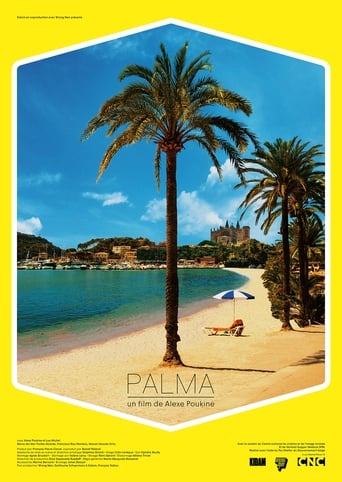
Jeanne take her daughter for the week-end in Majorque. While everything goes to rack and ruin, mother’s only concern is to photograph Kiki, the classroom mascot.
Jeanne take her daughter for the week-end in Majorque. While everything goes to rack and ruin, mother’s only concern is to photograph Kiki, the classroom mascot.

This student film by the award-winning Helena Třeštíková bears many of the hallmarks of her later work. Made as a graduation piece when she was at the FAMU Film and TV Academy in Prague, we see the director developing the distinctive observational style of filmmaking that she has used so effectively throughout her career. Over the course of several months, she follows a young pregnant woman as she becomes slowly acquainted with the joys and responsibilities of motherhood.
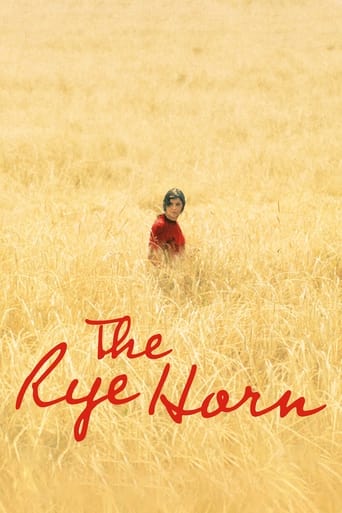
Maria is a shellfisherwoman and midwife in a small village in the Illa de Arousa in 1970s Galicia. After an unexpected event, she is forced to flee to Portugal.
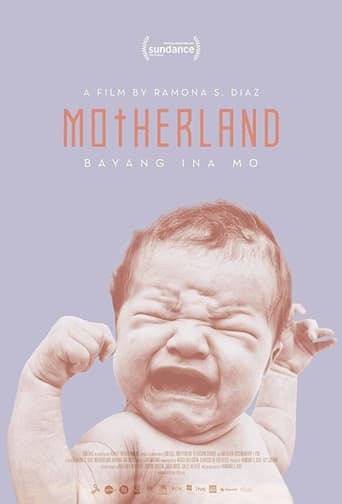
The planet’s busiest maternity hospital is located in one of its poorest and most populous countries: the Philippines. There, poor women face devastating consequences as their country struggles with reproductive health policy and the politics of conservative Catholic ideologies.

She drove me into a corner, then forced me to go beyond my limits. She made me confront the absolute: love, sacrifice, tenderness, abandonment. She dislocated me, transformed me. Why didn't anyone warn me? Why doesn't anyone ever talk about this?" Un heureux événement, or an intimate view of motherhood, sincere and with no taboos.
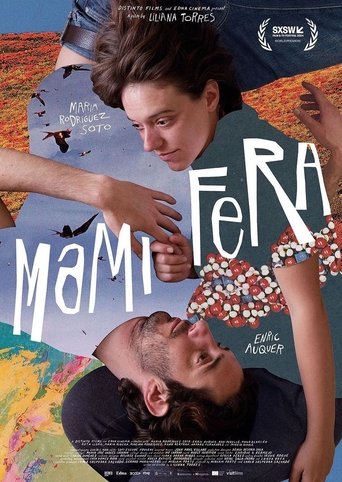
Lola (40) enjoys a happy life until an unforeseen pregnancy throws her plans into disarray. Resistant to motherhood and confronted by societal expectations, Lola and her boyfriend, Bruno, deal with the situation. As Lola confronts her inner fears about the repercussions of not embracing motherhood, she embarks on a quest for answers. Unexpectedly, Bruno reveals his desire to become a father, adding further tension and complexity to Lola's search for clarity about her future amidst pressure to conform to societal norms.
Helena, a woman in her early 40's, is obsessed with getting pregnant. After failing her last try, her neighbors get back from the hospital with their new born baby. Helena breaks in to their house when they´re gone, steals the baby monitor and starts listening to what happens next door.
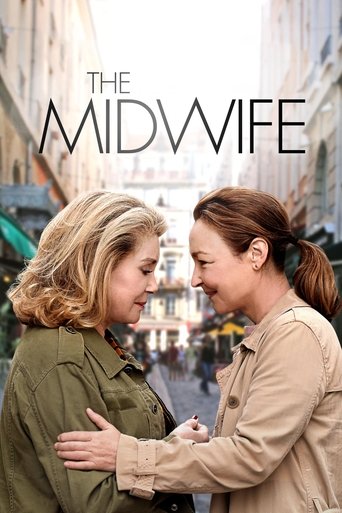
Claire is a midwife and has devoted her life to others. At a moment when she is preoccupied by the imminent closure of the maternity clinic where she works, her life is further turned upside down when Béatrice, her father's former mistress, turns up on the scene. Béatrice is a capricious and selfish woman, Claire's exact opposite.
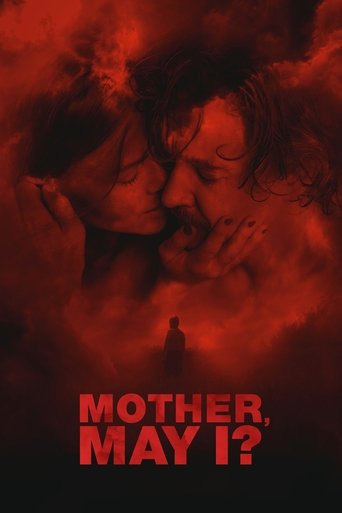
Emmett enters into a nightmarish game of therapy with his wife Anya, who has inexplicably taken on the persona of his estranged and recently-deceased mother.

Natalia is a 17-year-old mom living with her mother and son, Antos. She wanted to have a baby because it was a “cool” thing to do, and because she feels she has someone to love; someone who can love her in return. Everything changes when Natalia’s mother decides to move out, giving Natalia a chance to lead a “normal life.”
By approaching the process of sexual reassignment, the work mixes data and experiences, focusing on family relationships and the nuances of the feminine.
Given the fetishizing and normalizing character that is given to motherhood in patriarchy in order to perpetuate the social order, do we truly choose to be mothers? Why is care, of fundamental vital labor, presupposed as an especially appropriate task for women?
Saeko and Yukako live together in a small apartment complex in Tokyo. After the Tohoku earthquake in 2011, both live in a state of unease. Saeko, who is in a divorce, is worried that her daughter is exposed to radiation. Yukako is also afraid of radiation and tries to convince her husband to move. The two become friends after Yukako tries to save Saeko after a suicide attempt.
Being mother is the most natural thing in the world. Or so it seems. Yet the demands on women with children have rarely been as overloaded and contradictory as they are in today’s Western world. Promises of happiness are often followed by disadvantages, excessive demands and feelings of guilt. The mother has become an artificially glorified ideal, which nevertheless is often legitimized by the „nature of the woman“. We live in a time when three people could claim to be the same child’s mother: egg donors give their genes to beget children, surrogate mothers deliver babies which they give away immediately after birth, and men raise children by themselves – without a woman at their side. Hence the question arises: What makes a human being a real mother?
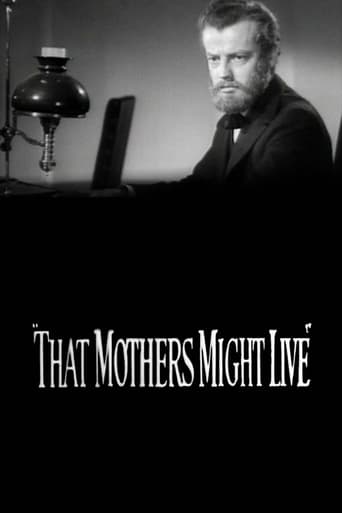
That Mothers Might Live is a 1938 American short drama film directed by Fred Zinnemann. The short is a brief account of Hungarian physician Ignaz Semmelweis and his discovery of the need for cleanliness in 19th-century maternity wards, thereby significantly decreasing maternal mortality, and of his struggle to gain acceptance of his idea. Although Semmelweis ultimately failed in his lifetime, later scientific luminaries advanced his work in spirit like microbiologist Louis Pasteur, who provided a scientific theoretical explanation of Semmelweis' observations by helping develop the germ theory of disease and the British surgeon, Dr. Joseph Lister who revolutionized medicine putting Pasteur's research to practical use. In 1939, at the 11th Academy Awards, the film won an Oscar for Best Short Subject (One-Reel).

Under the shade of a Magnolia tree, a group of pregnant women gathers weekly. Among them is Teresa, an experienced midwife who listens to them attentively. Sitting in a circle, the women reflect on the impending birth of their children and their own emerging roles as mothers.
Two drag queens living in a place where homophobia and transphobia are common open their hearts to the world, revealing the human being behind the makeup and wigs. They share the reality of drag as an art form and what it means to move forward as part of the LGBTTTI+ community in a Latin American context.

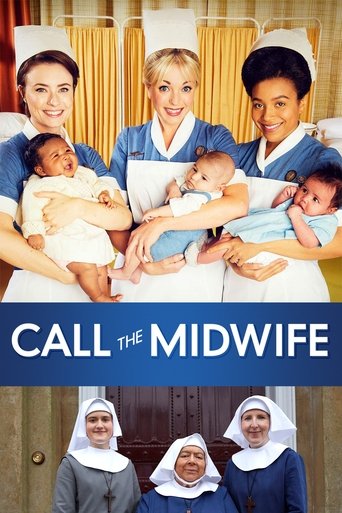
Drama following the lives of a group of midwives working in the poverty-stricken East End of London during the 1950s, based on the best-selling memoirs of Jennifer Worth.
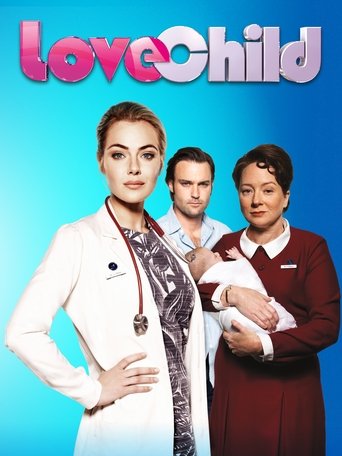
The lives of staff at the fictional Kings Cross Hospital and the wild streets of Darlinghurst in the 1960s. Joan Miller is a smart and sophisticated midwife who returns home from London to take a job at the Kings Cross Hospital. Dr Patrick McNaughton is a charismatic head of obstetrics at Kings Cross Hospital. Frances Bolton is the tough matron who also controls the running of Stanton House, a home for unwed pregnant young women.
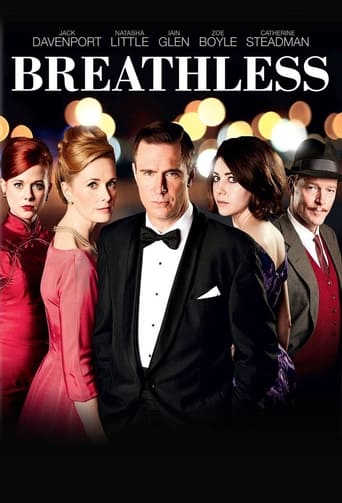
Hospital drama set in London during the early 1960s, following the staff of a busy gynecology ward at a time when abortion is illegal and the contraceptive pill is only just becoming available to married women.
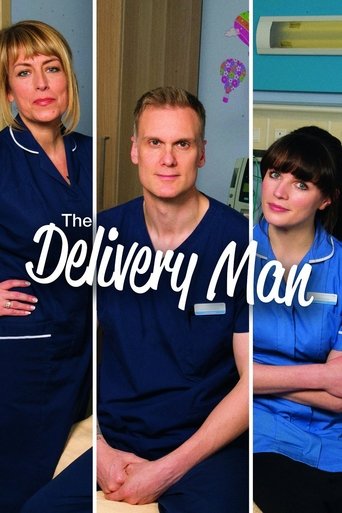
Matthew decides to leave his job and train to become a male midwife on a busy maternity ward. He is soon joined by best friend and former policeman friend Ian who joins as the hospital security guard.
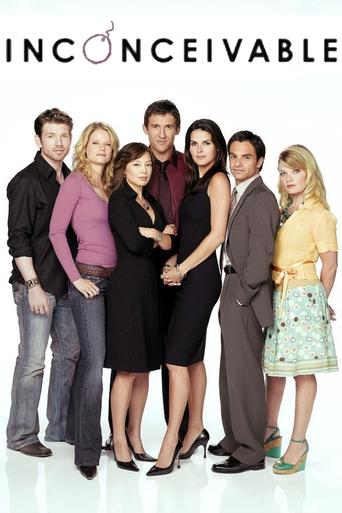
Inconceivable is an American primetime television medical drama, which was broadcast on NBC. The program premiered on September 23, 2005. The show revolved around the professional and personal lives of those who work at the Family Options Fertility Clinic. The clinic is run by its co-founders along with their new partner. The staff includes an attorney, a nurse, office manager and a medical technician. Only two episodes aired before the series was canceled.

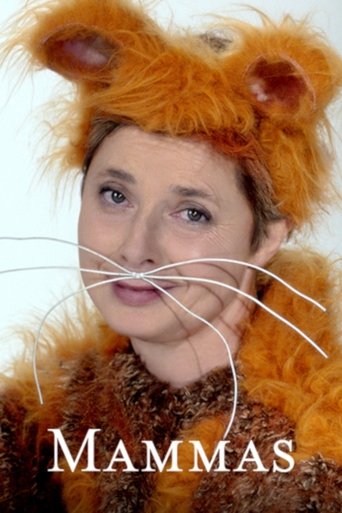
Isabella Rossellini is convinced that, in the maternal animal world, anything goes. 'Mammas,' a series of short videos, has Rossellini playing the role of nine different animals to show the viewer that some mothers lie, are polygamous, and walk out on their animal children all the time.

There is no bigger moment in a person’s life than when they first hold their baby in their arms. It doesn’t matter how many guidebooks you’ve read, or antenatal classes you’ve attended - nobody is ever prepared for the total shock of new parenthood. This warm and insightful new series follows the lives of eight babies in those first six months of their lives and the impact on their parents’ lives and relationships. Our families are drawn from a range of backgrounds – from young first-time parents of triplets, to seasoned pros, a single-parent family to a modern-day ‘earth mother’. We will follow each of our families on the rollercoaster ride of their lives.