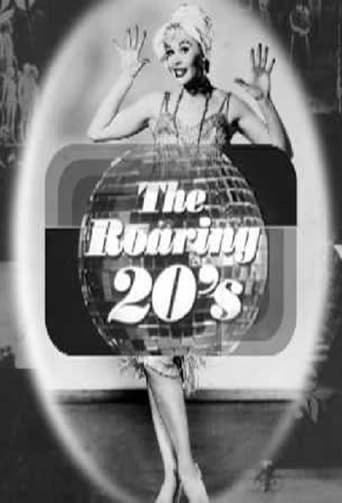
The Roaring 20s 1970
The Roaring 20s is an American drama television series that aired on ABC from October 15, 1960 until January 20, 1962.
The Roaring 20s is an American drama television series that aired on ABC from October 15, 1960 until January 20, 1962.
First responders are followed as they rush to the aid of people in need in this series, which premieres with their search for a possible train-crash victim. Also: A car accident leaves a bicyclist dead; a man pulls himself out of a wrecked vehicle before it erupts in flames; and a barefoot homeless man receives an unexpected gift.

Make Me Laugh is an American game show in which contestants watched three stand-up comedians performing their acts, one at a time, earning one dollar for every second that they could make it through without laughing. Each comedian got sixty seconds to try to crack the contestant up.
The Money or the Gun was an Australian comedy/talk-show on the ABC network. It ran from 1989 to 1990, with occasional specials until 1994. It was written by Andrew Denton, Simon Dodd, Bruce Griffiths, and George Dodd, directed by Martin Coombes and produced by Mark Fitzgerald. Each episode was based on a significant theme, with Denton interviewing a number of people as well as conducting vox pops on the street. Significant episodes include "Guns-The Musical" and the award-winning episode on disabilities, "The Year of the Patronising Bastard". In 1993, a one-off special was called "Topic of Cancer", which talked to teenagers with cancer. In 2003, Denton held a 10-year reunion for the people on the 1993 show, as part of his ABC interview programme Enough Rope.
The Martha Wright Show is a 15-minute musical variety program starring singer and actress Martha Wright which aired at 9:15 pm EST on ABC television from April 18 to December 5, 1954. The program was also known as The Packard Showroom for its sponsor, Packard automobiles. Joining Wright, a native of Seattle, Washington State, in her short-lived program were pianists Norman Paris, who wrote the theme song for the CBS game show I've Got a Secret, and trumpet player Bobby Hackett and his band. The Martha Wright Show replaced The Jane Pickens Show, which returned in July 1954, as Wright resumed her program in that time slot in September for a final three-month run. Jane Pickens Langley, a native of Macon, Georgia, was another vocalist of that era. Wright's series followed The Walter Winchell Show and aired opposite Ronald W. Reagan's General Electric Theater on CBS and the pair of NBC's alternating anthology series, Goodyear Television Playhouse and The Philco Television Playhouse.
Stand By for Crime is an American police drama that aired on ABC on Saturday nights from January 11, 1949 to August 27, 1949. The series stars veteran newsman Mike Wallace under his real name, Myron Wallace. The series is notable for being the first program to be transmitted from Chicago to New York.
Yours for a Song is an American game show, created by Bob Russell, that aired on ABC from 1961-1963 with Bert Parks as host and Johnny Gilbert as announcer. The series, which filmed in New York City, aired in primetime from November 14, 1961 to September 18, 1962 and in daytime from December 4, 1961 to March 29, 1963.
Network (and later, syndicated) show which packaged classic Warner Bros. cartoons.

14 international bachelors and bachelorettes from such countries as Switzerland, Japan and Australia compete and, hopefully, find love with 12 of America's Bachelor Nation favorites. These singles will go head-to-head in winter-themed challenges, including the toughest sport of all – love.
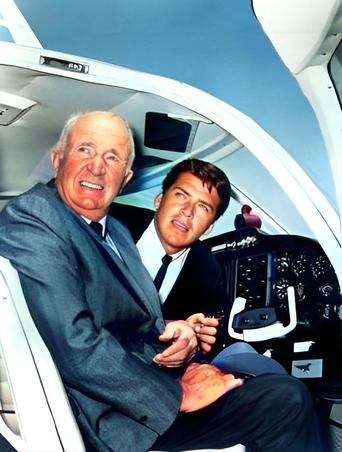
The Tycoon is a 32-episode American situation comedy television series broadcast by ABC. It starred Walter Brennan as the fictitious businessman Walter Andrews, similar to his birth name of Walter Andrew Brennan. As chairman of the board of the Thunder Corporation that he founded but no longer actively runs, Brennan plays an eccentric and cantankerous millionaire with a common touch who helps promising persons in need. The series aired with new episodes at 9 p.m. Eastern time Tuesday from September 15, 1964, until April 27, 1965. It continued in reruns until September 7, 1965. The program did not develop sufficient audience, presumably because viewers may have preferred the versatile Brennan as the bucolic Grandpa Amos McCoy in his 1957-1963 ABC and CBS sitcom The Real McCoys. Oddly, The Tycoon has ther same name as an episode of The Real McCoys also called "The Tycoon," which aired four years earlier on August 23, 1960. After The Tycoon floundered, Brennan returned to ABC two years later in a more homespun role, a western The Guns of Will Sonnett with costar Dack Rambo. Jerome Cowan and Van Williams costarred with Brennan in The Tycoon. Cowan played Herbert Wilson, a by-the-book "bean counter" who decried Brennan’s questionable expenditure of company resources. Williams starred as young executive Pat Burns. George Lindsey, later with The Andy Griffith Show, appeared in a few episodes of The Tycoon as Tom Keane. Van Williams had earlier appeared as Ken Madison in two ABC detective series Bourbon Street Beat with Richard Long and Andrew Duggan and in Surfside 6 with Troy Donahue and Lee Patterson. Later, Williams starred on ABC's The Green Hornet.
Author Meets the Critics was an American talk show which was broadcast by the National Broadcasting Company, American Broadcasting Company, and the DuMont Television Network. The series began as a mid-season replacement on NBC on April 4, 1948, but was transferred to ABC during 1949. The show was transferred back to NBC during 1951, and then to DuMont from January 10, 1952 to October 10, 1954.
The Girl In My Life was an American daytime television show spotlighting women who made a difference in people's lives. The show was hosted by Fred Holliday and the announcers were Bob Warren and John Harlan. The program aired on ABC during the 1973-1974 TV season.
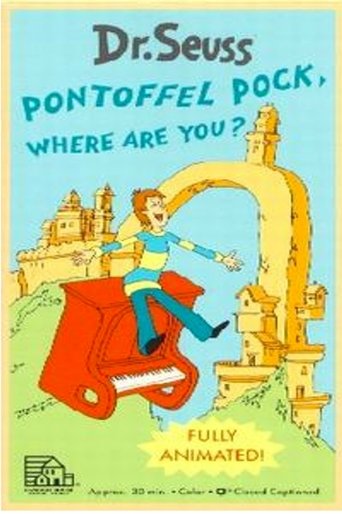
Pontoffel Pock, Where Are You? is an animated musical television special written by Dr. Seuss, directed by Gerard Baldwin, produced by DePatie-Freleng Enterprises, completed in 1979 and first aired on CBS on May 2, 1980. This was one of the final cartoons done at DePatie-Freleng as the studio would be sold to The Coca-Cola Company and become Sunbow Productions in 1981. The songs are by Joe Raposo.
Your Witness is an American dramatized court show that aired on the ABC network from 1949 to 1950. It aired Mondays at 8:00 PM EST, and was based around real-life cases. It is among the very first television court programs.
Medical Horizons is a public affairs television series, focusing on advancements in medical technology, which aired on ABC from September 12, 1955 to March 5, 1956. The program, broadcast live, sometimes offered surgical scenes as well as information about new medical equipment. The series was hosted for the first four episodes by Quincy Howe. He was replaced by Don Goddard, later a temporary ABC News anchorman. Medical Horizons ran on Monday evenings from 9:30 to 10 p.m. Eastern. It aired opposite the CBS situation comedy December Bride, starring Spring Byington, and the NBC anthology series Robert Montgomery Presents. After the 26-week prime time run, Medical Horizons switched to Sunday afternoons from September 1956 to June 9, 1957.
Petals is an Australian children's animated television programme produced and created by Mark Barnard and aired on the ABC. It ran from 1998 to 1999 consisting a total of two seasons and 55 episodes and was aimed at pre-school children aged 2–6. After it ended in 1999, the series was still continued to be repeated on the ABC and ABC1 until 2004.
The 1980s revival of the American educational television series of the 1950s.
Marilyn: The Untold Story is a 1980 television movie, about the life of the 1950s sex symbol-movie star, Marilyn Monroe. The feature stars Catherine Hicks as Monroe; Richard Basehart as her early-career agent Johnny Hyde; Frank Converse as her second husband Joe DiMaggio; Jason Miller as her third husband Arthur Miller; Kevin Geer as her first husband James Dougherty; Viveca Lindfors as her acting coach Natasha Lytess; and Sheree North as her mother Gladys Baker. The movie premiered in late-1980, and was greeted with positive reviews. Catherine Hicks was praised by the critics for her portrayal of Monroe, as were others including Richard Basehart, Frank Converse, Sheree North and Jason Miller, playing fellow playwright Arthur Miller.
Make a Wish is an American children's television series which ran on ABC from 1971 to 1976. Produced by ABC News, it was hosted by musician Tom Chapin and created and produced by Lester Cooper. It replaced Discovery, a similar series for children also produced by ABC News. Each episode of the series, broadcast on Sunday mornings, focused on a particular theme. One episode, for instance, was about snakes, and another was about motorcycles. Chapin would introduce the topic in much the same manner: "I think a snake is what I'll be. Imagine all the possibilities." After that there would be a sort of free association presentation on the theme featuring stock footage, animation, and Chapin's music and voiceover commentary. The quick-cutting, free-association, stream-of-consciousness style of the show caused Chapin, years later on a talk show, to describe Make a Wish as "a show for six-year old speed freaks." The series won a Peabody Award for Best Children's Series in 1971. Some songs performed on the show were written by Tom's brother, Harry Chapin. General composer of the show was Bernard Green, who also wrote the music to the title song "Make a Wish," with lyrics by Cooper, sung by Chapin.
