Doctor Who

Doctor Who 1963

7.88

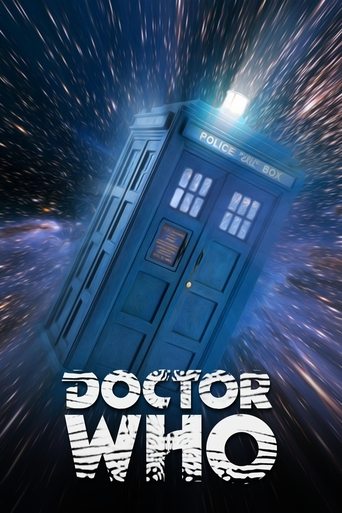
The adventures of The Doctor, a time-traveling humanoid alien known as a Time Lord. He explores the universe in his TARDIS, a sentient time-traveling spaceship. Its exterior appears as a blue British police box, which was a common sight in Britain in 1963 when the series first aired. Along with a succession of companions, The Doctor faces a variety of foes while working to save civilizations, help ordinary people, and right many wrongs.

1963

BBC Proms

BBC Proms 1947

7.70

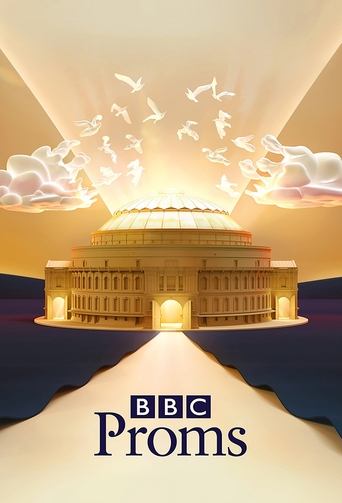
The World's Greatest Classical Music Festival. The BBC Proms is a classical music festival held every summer at the Royal Albert Hall in London, and in recent years has explored an innovative series of Proms around the UK with concerts in all four nations. Its aim: to bring the best in classical music to the widest possible audience, which remains true to founder-conductor Henry Wood’s original vision in 1895. Whether you are a classical connoisseur or think classical music isn’t for you, there is something for everyone in the eight-week stretch of concerts.

1947

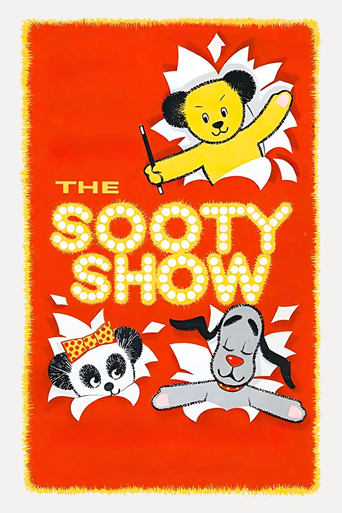
The Sooty Show

The Sooty Show 1955

6.00

The Sooty Show is a British children's Puppet series which aired on the BBC from 1955 to 1967 and ITV from 1968 to 1992. It follows the adventures and comedic day to day life of puppets Sooty, Sweep and Soo with their owner Harry Corbett, and in later years, his son Matthew.

1955

Sunday-Night Play

Sunday-Night Play 1960

1

BBC anthology drama series that ran over four seasons and replaced the previous BBC Sunday Night Theatre series.

1960

Blue Peter

Blue Peter 1958

7.60

A fun-packed and informative magazine show for younger viewers with information and reports from around the world.

1958

BBC Radio 2 Piano Room

BBC Radio 2 Piano Room 1970

7.00

Live performances from much-loved music stars, alongside the BBC Concert Orchestra, at the BBC's Maida Vale Studios.

1970

A for Andromeda

A for Andromeda 1961

5.00

A for Andromeda is a British television science fiction drama serial produced and broadcast by the BBC. Written by cosmologist Fred Hoyle, in conjunction with author and television producer John Elliot, the series aired in seven parts from 3 October to 14 November 1961. In the not-too-distant future of 1970, a mysterious signal from space arrives with instructions to build a powerful super-computer. Once completed, the evice's motives provokes discourse between scientists John Fleming and Madeleine Dawnay as further instructions are to create a living organism, which Dawnay develops. The entity compels lab assistant Christine to commit suicide, and, upon manifestation, adopts her form, now known as Andromeda. The first major role for actress Julie Christie (Christine/Andromeda), only one episode survives, along with extracts from other episodes. It has been remade twice: by RAI in 1972 and by the BBC in 2006. A sequel, The Andromeda Breakthrough, aired in 1962.
1961

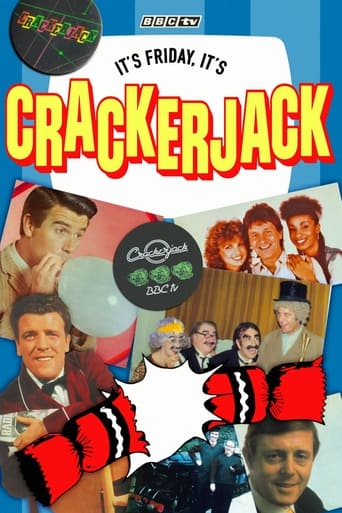
Crackerjack

Crackerjack 1955

5.00

Crackerjack was a British children's comedy/variety BBC television series. It started on 14 September 1955 and ran for over 400 shows, first in black and white and later in colour, until 21 December 1984. It was revived in 2020 on CBBC.

1955

Suspense

Suspense 1962

5.50

Anthology series telling suspenseful tales.

1962

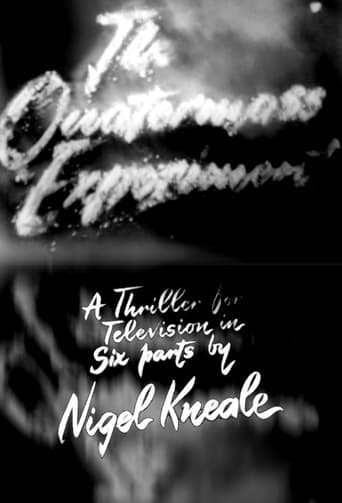
The Quatermass Experiment

The Quatermass Experiment 1953

6.63

Set in the near future against the background of a British space programme, the story of the first crewed flight into space, supervised by Professor Bernard Quatermass of the British Experimental Rocket Group.

1953

Playbox

Playbox 1955

1

Playbox was a British children's television show that ran on BBC from 1955 to 1964. Presenters who appeared on it included Eamonn Andrews, Rolf Harris, Tony Hart, Cliff Michelmore and Johnny Morris

1955

Studio 4

Studio 4 1962

5.00

Studio 4 is a BBC drama anthology series, filmed at the BBC TV Centre's Studio Four, and screening over two seasons in 1962. The series was envisaged as a sequel to Storyboard, an anthology series which had been transmitted the previous year.

1962

The Railway Children

The Railway Children 1951

1

The first BBC TV version was presented as an 8 part x 30mins. serial between 6 Feb 1951 and 27 Mar 1951. The original production was broadcast live from the Children's TV studio at Lime Grove. There was one transmission during the week with a live repeat, often with a totally different crew, on Sundays. In those days, the amount of telecine (film inserts) was relatively small, so there was great pressure on the actors and the camera crews.

1951

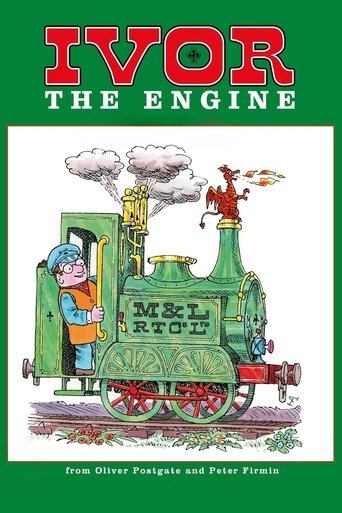
Ivor The Engine

Ivor The Engine 1959

9.00

...Not very long ago, in the top left-hand corner of Wales, there was a railway. It wasn't a very long railway or a very important railway, but it was called The Merioneth and Llantisilly Rail Traction Company Limited, and it was all there was. And in a shed, in a siding at the end of the railway, lives the Locomotive of the Merioneth and Llantisilly Rail Traction Company Limited, which was a long name for a little engine so his friends just called him Ivor..." ...And that was how it began, back in 1959: one of Oliver Postgate's most loved creations, Ivor the Engine. It was a series about the Welsh adventures of a little green railway engine and his many friends. But Ivor wasn't an ordinary steam engine. He pretty much wished he was a person and ended up doing things like singing in a choir and swimming in the sea! One season of six, 10 minute, Black and White films was made for and screened by Associated-Red.

1959

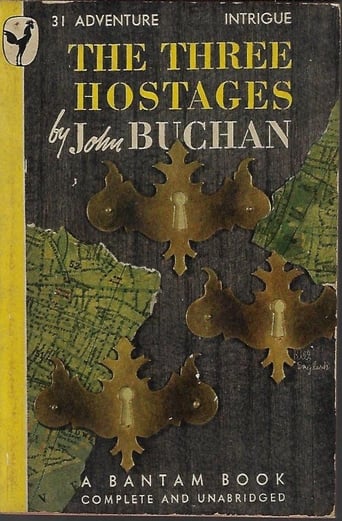
The Three Hostages

The Three Hostages 1952

1

An adaptation of the novel The Three Hostages by John Buchan.

1952

Stranger on the Shore

Stranger on the Shore 1961

1

Marie-Hélène Ronsin, a young French teenager, is on her first trip to England as an au pair. Speaking some English, but very shy, she lives with a family in Brighton, and faces the challenges of culture shock.

1961

Starlight

Starlight 1936

4.00

Starlight was an early British television programme, one of the first regular series to be broadcast by the BBC Television Service during the 1930s. Its first edition was broadcast on 3 November 1936 – the day after the service had officially begun – and it continued to be broadcast until the suspension of television for the duration of the Second World War during 1939. After the resumption of BBC television during 1946, Starlight was one of the few pre-war programmes to be reinstated, and it was broadcast for a further three years until 1949. A variety show, the programmes would feature comedians, singers, dancers and various other entertainment acts. One notable edition of the 1930s gave popular singer Gracie Fields her first ever television appearance. As with all other BBC programmes of the time, Starlight was transmitted live from the studios at Alexandra Palace. The shows were not recorded, and no material other than still photographs exists for the series now.

1936

Family Affairs

Family Affairs 1949

1

Family Affairs was the first television serial broadcast by BBC Television.

1949

The Diary of Samuel Pepys

The Diary of Samuel Pepys 1958

1

Based on the diaries of the naval adiminister Samuel Pepys, it portrays life at the court of Charles II during the 1660s.

1958

Theatre Night

Theatre Night 1957

1

A BBC television series of forty-five-minute excerpts from stage plays running in London.

1957