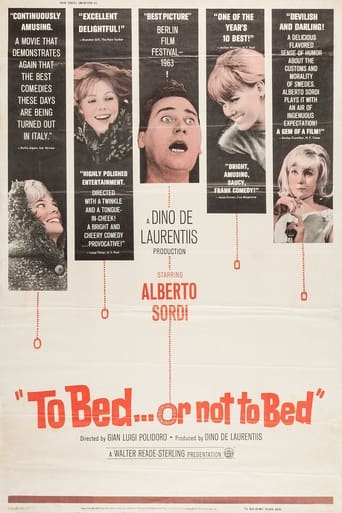
To Bed or Not to Bed 1963
An Italian fur merchant who is going to Sweden for the first time to attend the annual fur auctions in Stockholm.
An Italian fur merchant who is going to Sweden for the first time to attend the annual fur auctions in Stockholm.
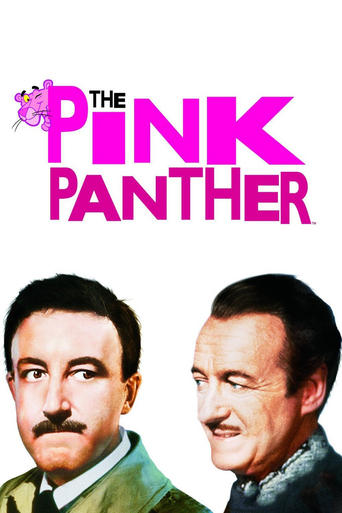
The trademark of The Phantom, a renowned jewel thief, is a glove left at the scene of the crime. Inspector Clouseau, an expert on The Phantom's exploits, feels sure that he knows where The Phantom will strike next and leaves Paris for the Tyrolean Alps, where the famous Lugashi jewel 'The Pink Panther' is going to be. However, he does not know who The Phantom really is, or for that matter who anyone else really is...
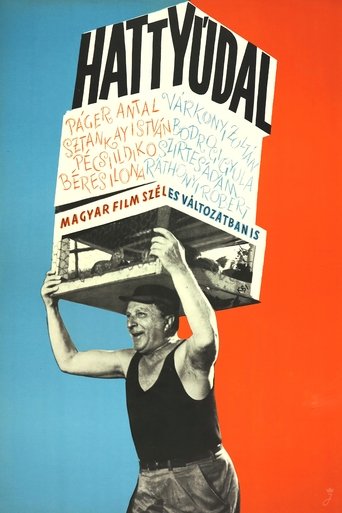
A past world is revived in the little cottage in the outskirts, next to the housing blocks under construction. Tamburás, the old hobo collects swerved youth: Diák, who desires freedom, the bus driver who is deprived of his license for having run over someone, and the rest. They have got an easy and unbound life there, with constant music, small thefts, occasional labour, tricks.
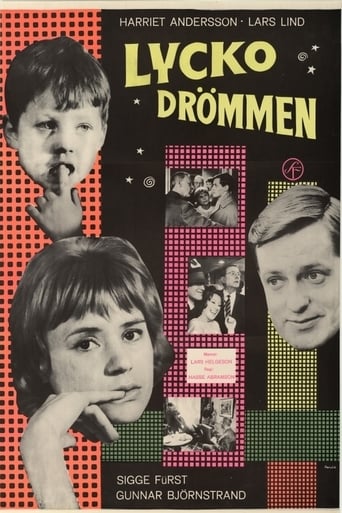
The Karlsson family moves from a small village to a suburb outside Stockholm. The change from a country life to the big city is not easy.

The headmaster of a stuffy British boys' school receives a surprise visit from the now-grown, and very voluptuous, daughter he fathered years earlier in the Pacific islands.
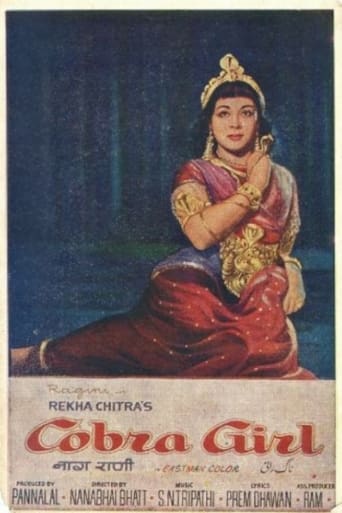
A princess attempts to win back her kingdom from a powerful shape-shifting sorcerer.

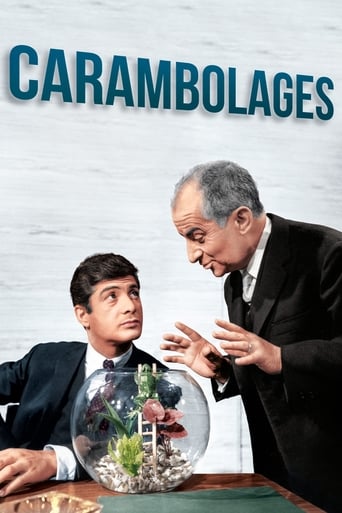
Paul Martin is the subservient brown-nosing youngster who needs quick advancement up the hierarchy to pay for the modern lifestyle he is buying on credit. Seeing that marrying his immediate superior's daughter will not get him the results he wants, he begins plotting the demise of the head of the company. The company itself specializes in holiday travel and unscrupulously brutalizes its customers for maximum profit, spending more thought on publicity gimmicks than customer service...
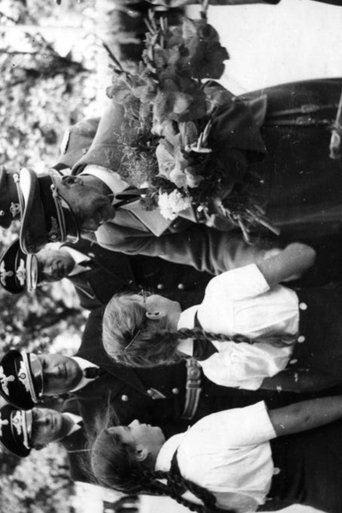
Portrait of Hans Globke, jurist at the ministry of interior during the Third Reich and co-author of an official commentary to the Nuremberg Laws of 1935, the Nazi Racial Legislation. While Adenauer appointed him Secretary of State in 1953, he was sentenced to lifelong imprisonment in absentia by a GDR court in 1963.
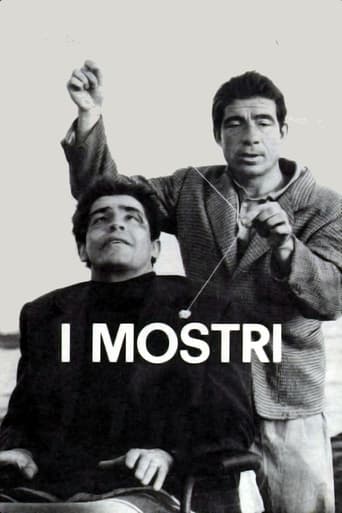
The myths of the sixties are satirized in 20 episodes.
A physically disabled lady is alone in her apartment one evening and has just accidentally overheard a conversation about a planned murder...
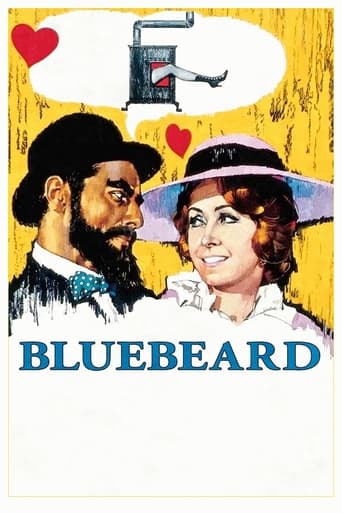
Paris, France, during the First World War. While thousands of soldiers die every day on the battlefields, Henri Landru, a seemingly respectable furniture dealer, married and father of four children, relentlessly feeds his own sinister factory of death.
A German woman on a ship returning to Europe notices a face of another woman which brings recollections from the past. She tells her husband that she had been an overseer in Auschwitz during the war, but she has actually saved a woman's life.
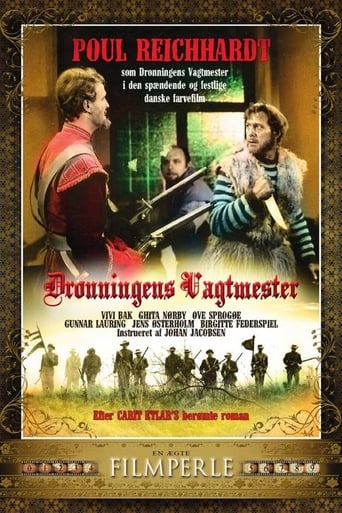
When the Swedes occupy a Danish manor house, Svend Poulsen decides to help the family to safety. Along the way, Ib is taken prisoner. Svend Poulsen and his gang pretend to be a platoon of Swedish soldiers arriving at the castle where Ib is chained to the roof. During dinner that evening, the Swedish commander becomes suspicious, and soon the soldiers are fighting each other. However, Svend manages to free Ib.
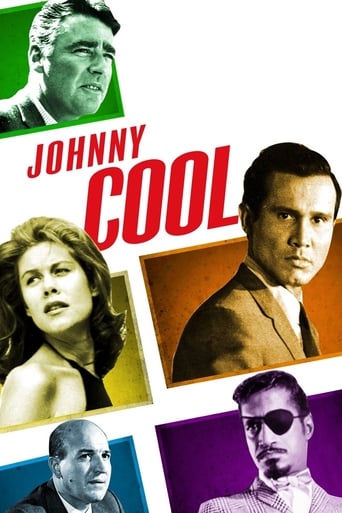
A deported gangster trains an Italian convict to take over his operations in the U.S.
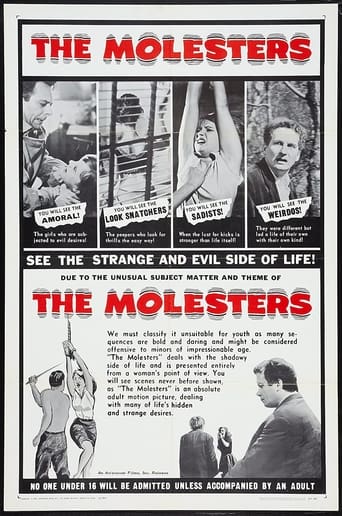
In exploring sex offenses, particularly against children, this film reveals the inner workings of the Zurich police and INTERPOL as they pursue persons accused of voyeurism, rape, fetishism, sadism, and masochism. After the criminals are arrested and given psychological tests, they may be sentenced to an institution or undergo brain surgery (with their consent) in order to be rehabilitated.
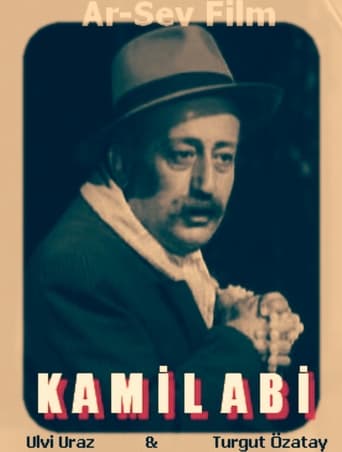
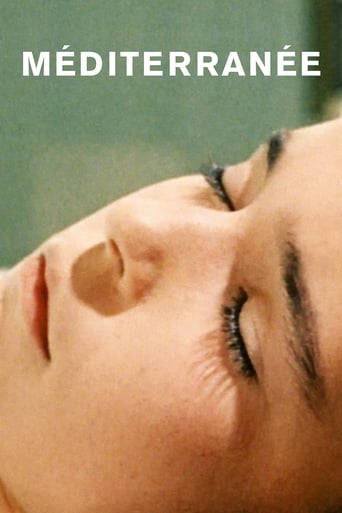
[Here] Pollet made a work that is the very definition of what French critics like to call an ovni or ufo (as in ‘unidentified filmic object’). [It] has been described as being ‘like a comet in the sky of French cinema,’ an ‘unknown masterpiece,’ and an ‘unprecedented’ work that refuses interpretation even as it has provoked reams of critical writing. Its rhythmic collage of images – a girl on a gurney, a fisherman, Greek ruins, a Sicilian garden, a Spanish corrida – is accompanied by an abstract commentary written by Sollers, and only the somber lyricism of Antoine Duhamel’s score holds the film’s elements together. At first viewing, you fear that [it] might fly apart into incoherent fragments. Instead, over the course of its 45 minutes it invents its own rules, and you realize you’re watching something like the filmic channeling of an ancient ritual.
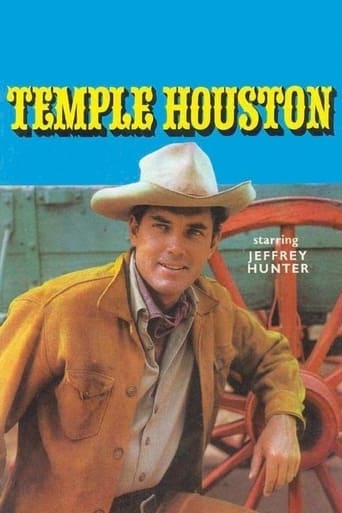
Temple Houston is a 1963–64 NBC television series which has been called "the first attempt . . . to produce an hour-long Western series with the main character being an attorney in the formal sense." It was the only show Jack Webb sold to a network during his ten months as the head of production at Warner Bros. Television. It was also the lone series in which actor Jeffrey Hunter played a regular part.
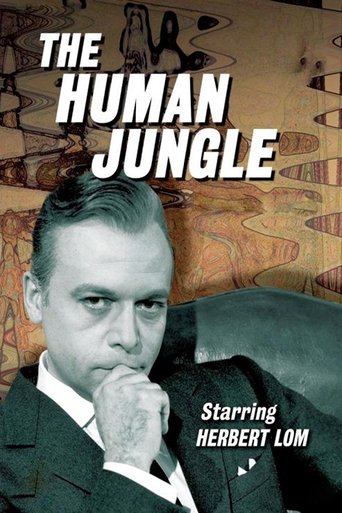
The Human Jungle is a British TV series about a psychiatrist, made for ABC Television by the small production company Independent Artists for transmission on ITV. Starring Herbert Lom, it ran for two series which were first transmitted during 1963 and 1965.
An anthology of single plays offering up adaptations of either of prominent stage plays or novels.
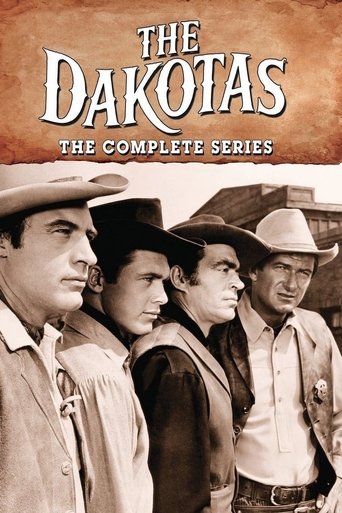
The Dakotas is an ABC/Warner Brothers western television series starring Larry Ward and featuring Jack Elam broadcast during 1963. The short-lived program is considered a spin-off of Clint Walker's Cheyenne. The Dakotas is perhaps most notable for the fact that it was cancelled one week after heavy viewer protest over an objectionable scene.
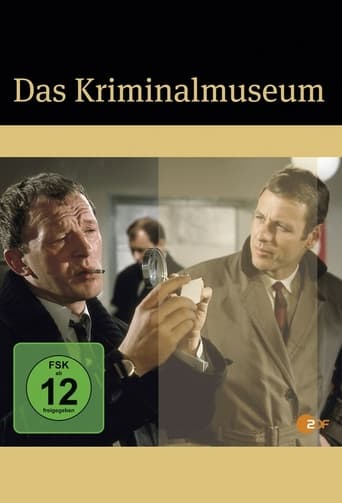
Das Kriminalmuseum was a German television series. It ran from 1963 to 1970 on ZDF and was one of its first programs. Each episode began with a tracking shot through an unspecified crime museum, stopping at one of the displays, whose story was then told. Each episode was between 60 and 75 minutes long and featured different actors as the criminal commissioner. The best known was Erik Ode, who in 1969 moved to Der Kommissar, appearing in 97 episodes. The theme music of the series was written by German composer Martin Böttcher, who also composed the complete scores for five episodes.
Das aktuelle sportstudio is a German sport magazine on German broadcaster ZDF.

A yearly musical contest organized by the municipality of Viña del Mar, Chile which takes place during the last week of February at the Quinta Vergara Amphitheater since February 21, 1960.

Ready Steady Go! is one of the UK's first rock/pop music television programmes and was a forerunner of MTV-type programming. It was conceived by Elkan Allan, head of Rediffusion TV. Allan was assisted by record producer/talent manager Vicki Wickham, who became the show's producer, and Michael Lindsay-Hogg who was appointed the show's director in 1965. It was broadcast from August 1963 until December 1966. It was produced by Associated-Rediffusion the weekday ITV contractor for London, called Rediffusion-London post 1964. The live show was eventually networked nationally. The show gained its highest ratings on 20 March 1964 when it featured the Beatles being interviewed and performing their songs "It Won't Be Long", "You Can't Do That" and "Can't Buy Me Love" - the last of which was a hit at the time. RSG! USA! was a Dick Clark production in 1964. A trademark infringement ended the show after six episodes. Its last episode was broadcast on 23 December 1966.
Die fünfte Kolonne is a German television series.
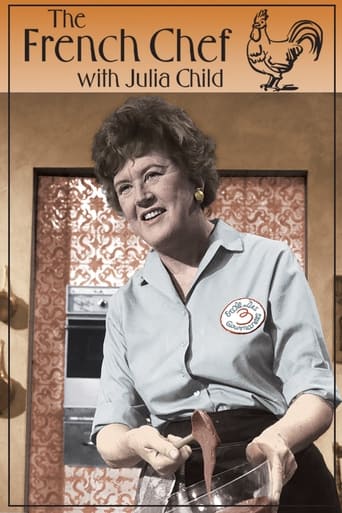
One of the first cooking shows on American television, created and hosted by Julia Child on public television to introduce the French way of cooking. It emphasized fresh ingredients, many of which were unfamiliar to Americans. Based on the books she co-authored, entitled Mastering the Art of French Cooking.

The concept of the series was the showing of unaired and unsold television pilots that did not make the television lineup for CBS. The show was successful during its first few seasons due to the fact that the show's concept, airing unsold and unaired television pilots, was a popular concept in the 1960s. But during its last two seasons on the air, the series did find some trouble due to the fact that the series were running out of pilots to air and, in their 4th season, they began airing repeats from the three seasons prior. During its 1966 summer run, the series aired eights new pilots and two repeats and during its last year airing five new pilots and four repeats.
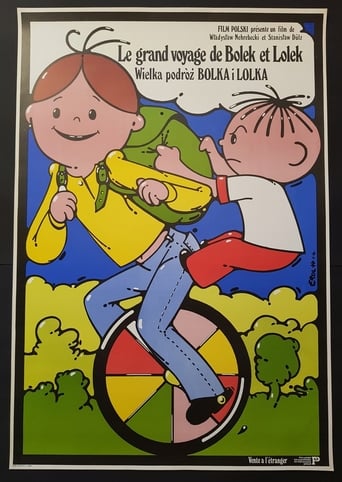
Bolek and Lolek are two Polish cartoon characters from the TV animated series by the same title. They are based on Władysław Nehrebecki's sons, named Jan and Roman, and were partially created by German-born Alfred Ledwig before being developed by Władysław Nehrebecki and Leszek Lorek. The series is about two young brothers and their fun and sometimes silly adventures which often involve spending a lot of time outdoors. They first appeared in an animated film in 1963. The names of the two characters are diminutives of Bolesław and Karol. In English, the cartoon was distributed as Jym & Jam and Bennie and Lennie. Some episodes were seen as part of Nickelodeon's Pinwheel. In 1973 the creators of the film placed on the request from the female viewing audience a girl character by the name of Tola. The first time she appeared in occurred in the episode entitled "Tola". In total, Tola appeared in 30 episodes. Most episodes do not have dialogues. Exceptions are feature-length films and the series from the 1980s, where the main characters' voices were done by: Bolek – Ewa Złotowska, Ilona Kuśmierska; Lolek – Danuta Mancewicz, Danuta Przesmycka. During the period of the Peoples Republic of Poland, Bolek and Lolek were reproduced in a large quantity of toys: action figures, movies, postcards, online arcades, puzzles, etc., which can be seen in the Museum of Dobranocki of the PRL. They are also currently made in computer programs, coloring books, general picture books and games.
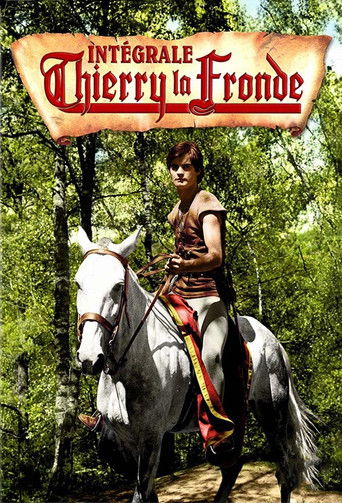
Thierry la Fronde was a French television series that aired in 1963–66 on the television station, ORTF original script by Jean-Claude Deret. Dubbed into English, it was shown internationally in the 1960s, including in Canada, where it was referred to under the original name, and also as The King's Outlaw. It was shown as well in Poland as Thierry Śmiałek. On ABC in Australia, it was called The King's Outlaw. In the Netherlands, 32 of the 52 episodes were shown in 1967 as Thierry de Slingeraar, as a Netherlands Television Service programme.

Gigantor is an American adaptation of the anime version of Tetsujin 28-go, a manga by Mitsuteru Yokoyama released in 1956. Jimmy Sparks controls a gigantic, powerful robot and uses it to fight crime. It debuted on U.S. television in 1964. As with Speed Racer, the characters' original names were altered and the original series' violence was toned down for American viewers.
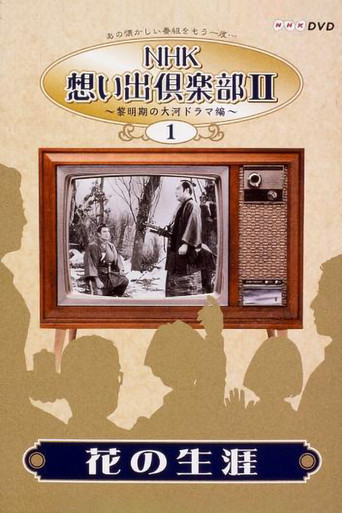
The story chronicles the life of Ii Naosuke.
Grindl is an American situation comedy that began in the fall of 1963 on NBC, originally sponsored by Procter & Gamble. The show, starring Imogene Coca in the title role, lasted for one season.
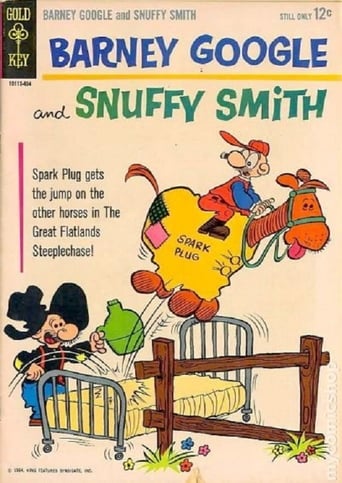
There's feudin', fussin' and a whole lot of good ol' fashioned fun goin' on as those back woods rascals, Barney Google and Snuffy Smith, rustle up a rib-ticklin' tub of mountain mirth. Barney and Snuffy are joined by the craziest collection of cantankerous characters ever to come out of them thar' hills, including Loweezy, Jughaid and Jerky Jockey for hours of down home country comedy.
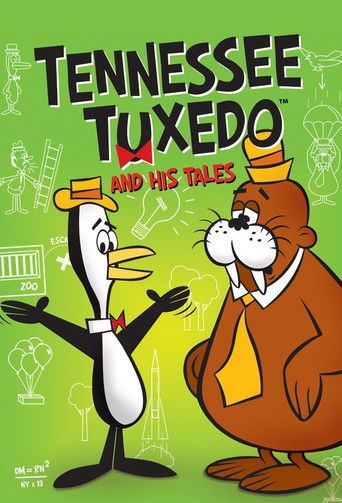
Tennessee Tuxedo and His Tales is a semi-educational animated cartoon TV series that originally aired on CBS from 1963 to 1966. It was produced by Total Television, the same company that produced the earlier King Leonardo and the later Underdog, and primarily sponsored by General Mills. The title is a play on “tuxedo and tails” formal wear.
